
Search Colleges, Exams, Schools & more


Login

CTET 2026 Exam (For September Session) : Application form (Out), Syllabus, Exam Dates, Eligibility

What’s New 
Other Top Exam Stories
About CTET 2026
Central Board of Secondary Education (CBSE) will open the CTET 2026 application correction facility on June 15, 2026 on the official website, ctet.nic.in. Candidates can access the CTET application form correction window 2026 until June 18, 2026. The CTET apply link was activated from May 11, 2026, to June 10, 2026. The CTET exam 2026 for the September session is scheduled to be conducted on September 6, 2026. Candidates will be able to download the CTET admit card 2026 around 2 days before the examination.
The CTET notification 2026 for the September session was released on May 11, 2026. The CTET exam 2026 is conducted in offline mode. Candidates interested in taking the exam are advised to review the CTET 2026 eligibility criteria in the official notification before filling out the application form. Candidates who successfully fill out the application form are issued the CTET admit card before the exam.
What is CTET?
The Central Board of Secondary Education conducts the CTET 2026 in offline mode. CTET is a national-level Central Teacher Eligibility Test. CBSE holds the CTET exam in two shifts, wherein candidates have the option to appear in paper 1, paper 2, or both papers. CBSE conducts two papers – Paper I for the primary stage (class I to V) and Paper II for the elementary stage (class VI to VIII).
Each of the two papers has 150 questions for 150 marks. The CTET examination is conducted with the aim to assess the factual knowledge of the candidate and more of conceptual understanding, application, problem-solving, reasoning, and critical thinking.
The questions asked in the CTET exam focus on evaluating the candidates' understanding of teaching the subject and whether the candidate has pedagogic content knowledge. The other aspect that will be taken into account to evaluate the candidate is the knowledge relevance of the subject in the school curriculum, as well as other aspects of teaching the subject, such as pedagogic content knowledge, which will comprise questions assessing planning of teaching-learning experiences, strategies for developing conceptual clarity, usage of teaching-learning aids, and assessment methodologies specific to the concept.
Candidates who qualify for the CTET exam are given a CTET Eligibility Certificate, and they are eligible to apply in schools under the Central Government, unaided private schools, and schools under the administrative control of Union Territories.
What is the Full Form of CTET?
The Central Board of Secondary Education mentioned the CTET full form in the official notification, which is the Central Teacher Eligibility Test. The objective of conducting the CTET 2026 exam is to recruit teachers for vacant positions in Kendriya Vidyalayas, Navodaya Vidyalaya, and Army schools, as well as in other government or private schools. The candidate who clears the CTET exam is given an eligibility certificate that has lifelong validity.
CTET 2026 exam - Highlights
CBSE notified us that the validity of the certificate of the CTET exam is for a lifetime. Previously, it was five years, and later increased to seven years. However, it will now be for a lifetime. Keeping in line with the New Education Policy (NEP), the candidates will have to appear in the CTET 2026 exam in offline mode.
CTET Exam Statistics for the past years
By analyzing the past years' CTET examination statistics, one will know the approximate number of candidates who appear in the CTET exam and how many candidates actually qualify.
| Year of the CTET examination | Total number of candidates who appeared in the test | Total Number of candidates who qualified for the exam |
| CTET September 2026 | TBA | TBA |
| CTET February 2026 | Paper 1 - 1211611 Paper 2 - 1867428 | Paper 1 - 358937 Paper 2 - 346738 |
| CTET December 2024 | Paper 1 - 5,72,489 Paper 2 - 11,36,087 | Paper 1 - 1,38,389 Paper 2 - 1,39,888 |
| CTET January 2024 | Paper 1 - 6,78,707 Paper 2 - 14,07,332 | Paper I - 1,27,159 Paper II - 2,39,120 |
| CTET August 2023 | Paper 1 - 12,13,704 Paper 2 - 11,66,178 | Paper I - 2,98,758 Paper II - 1,01,057 |
| CTET January 2021 | 23,51,725 | 6,54,299 |
| CTET December 2019 | 24,00,000 | 5,42,285 |
| CTET July 2019 | 23,77,000 | 3,52,000 |
| CTET September 2016 | 6,53,156 | 69,566 |
| CTET February 2015 | 6,77,554 | 80,187 |
| CTET February 2014 | 7,50,000 | 13,425 |
| CTET July 2013 | 7,76,000 | 77,000 |
| CTET November 2012 | 7,95,000 | 4,850 |
| CTET January 2012 | 9,00,000 | 55,422 |
How to contact the CBSE?
At any point in time, if the candidates face any problem with any aspect of the CTET exam, they can get in touch with the Central Board of Secondary Education at the following address, phone number, and email.
Address: CENTRAL TEACHER ELIGIBILITY TEST UNIT
PS 1-2, INSTITUTIONAL AREA, I P EXTENSION,
PATPARGANJ, DELHI-110092
Contact Number: 011-22240112
Website: directorctet@gmail. com
Read More
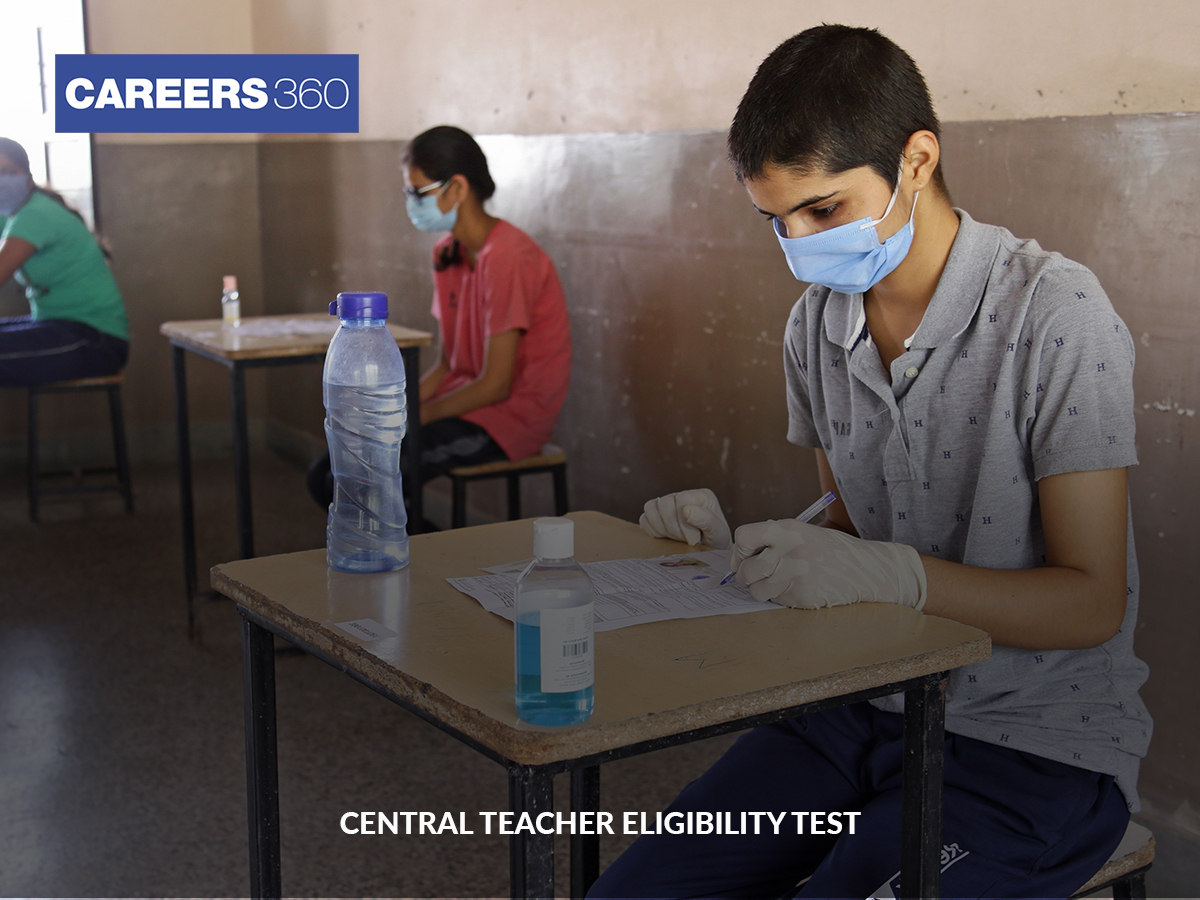
CTET 2026 Highlights
| Full Exam Name | Central Teacher Eligibility Test |
| Short Exam Name | CTET |
| Conducting Body | Central Board of Secondary Education |
| Frequency Of Conduct | Twice a year |
| Exam Level | National Level Exam |
| Languages | Assamese +17 more |
| Mode Of Application | online |
| Application Fee | Online : 1200 |
| Mode Of Exam | offline |
| Participating Colleges | 1 |
| Exam Duration | 2 Hours 30 Minutes |
CTET Important Dates
CTET Central Teacher Eligibility Test (session 2026)
The Central Board of Secondary Education issues the CTET admit card 2026 for the September session on the official website around 2 days before the examination. Candidates who successfully submit the application form along with the form fees will receive the CTET admit card 2026.
The complete details of the examination centre and the shift/time of examination are mentioned in the CTET 2026 admit card. After filling in the login credentials, candidates can download the CTET 2026 admit card. Those who are appearing for the CTET exam 2026 can check the steps given below to download the admit card.
Steps to download the CTET 2026 admit card
Step 1: Visit the official website
Step 2: Click the “Download Admit Card ” link and fill in all the details in the required fields.
Step 3: Now, click on submit and check all the details on the admit card.
Step 4: Download the CTET admit card 2026.
Step 5: Take the printout of the admit card to be carried on the day of the exam
Details mentioned on the CTET 2026 admit card
Centre No | Examination Centre Details | Candidate's Address |
Candidate's Name | Father's Name | Application number |
Roll Number | Date of Birth | Gender |
Category | Person With Disability (PwD) | Medium of Question Paper |
Language offered 1 | Language offered 2 | Date and time of exam |
Signature of the candidate | Signature of the director of CTET | Photograph of the candidate |
Note: If the scanned photograph or signature of the candidate is not visible on the CTET 2026 admit card or is missing, then in such a case, candidates must send a scanned copy of both the signature and the photograph through email or contact the CTET Unit for inclusion of the same in the admit card.
If the photograph of the candidate or the signature is not visible, they will not be allowed to appear for the CTET exam.
What to carry along with the CTET exam admit card?
Candidates are required to carry with them the following items and documents to the test centre:
Self-Declaration form along with the admit card
One photo identity proof
Transparent bottle of the sanitiser (50 ml)
Water bottle (500 ml)
What not to carry on the day of the CTET exam?
On the day of the Central Teacher Eligibility Test exam, candidates are not allowed to carry with them the following items.
Electronic gadgets such as mobile phones, pagers, pen drives, earphones, microphones, etc
Any stationery item like books, notes, geometry/ pencil box, plastic pouch, log table, writing pad, eraser, etc
No food or beverage is allowed at the CTET exam centre
CBSE mentions the eligibility criteria for the CTET examination in the official notification. Candidates are advised to check the eligibility criteria for CTET 2026 thoroughly before filling the online application form. The eligibility criteria are different for paper 1 and paper 2. Candidates can check the eligibility criteria of CTET 2026 for paper 1 and paper 2 from the table given below.
Eligibility Criteria of CTET 2026
Paper | Eligibility Required |
Paper 1 | Candidates must have a graduation degree and must be passed or appearing in the final year of 2 years Diploma in Elementary Education or |
Those who have scored 50% marks in graduation and have B.Ed degree can apply for paper - I. | |
Candidates who have passed senior secondary or it’s equivalent with a minimum of 50% marks and they must have also passed or appearing in the final year of 4 years, bachelor's in Elementary Education (B.El.Ed) | |
Candidates must have secured at least 45% marks in the senior secondary exam and must have passed or appearing in the final year of the two-year diploma course in the Elementary Education (In accordance with NCTE (recognization norms and procedure), Regulation, 2002) | |
Candidates with 50% marks in the senior secondary examination and also have passed or appearing in the final year of Diploma in Education (Special Education) | |
Candidates with a minimum of 50% marks and are appearing or passed the final year of 2-year diploma in Elementary Education. | |
Paper 2 | Candidates applying for paper II must have passed or appearing in final year of 2-year Diploma in Elementary Education and must also have a graduation degree. |
Candidates must have secured at least 50% marks in senior secondary or its equivalent and appearing or passed the final year of 4- year B.A/B.Sc.Ed or B.A.Ed/B.Sc.Ed. | |
Candidates should have passed Senior Secondary or its equivalent with not less than 50% marks and must have passed or appearing in final year of 4-year Bachelor in Elementary Education (B.El.Ed). | |
Or, candidates must be a graduate with not less than 45% marks and must have passed or appearing in the 1st year of B.Ed (Bachelors in Education) in accordance with NCTE. | |
Those who have obtained 50% marks in Graduation and must have passed 1-year B.Ed are eligible to apply for CTET. | |
Candidates must be Graduate and must have passed or appearing in final year of 2-year Diploma in Elementary Education |

The CTET 2026 September application form correction facility will be activated from June 15 to 18, 2026, on the official website, ctet.nic.in. The CTET 2026 application form was activated on May 11, 2026. The last date to fill out the CTET application form 2026 was June 10, 2026. Candidates looking to attempt the exam must submit the form and pay the CTET form 2026 fee by June 10, 2026.
In order to appear for the CTET 2026 exam, first and foremost, the candidates are required to register themselves on the online portal so that the application number and password are generated. After the successful registration, candidates need to log in with their credentials and then proceed to fill out the CTET 2026 application form.
The information that the candidates need to mention in the application form includes personal details, educational qualifications, and the language in which the candidate wants to appear in the CTET exam. There are two languages that the candidates are required to choose while filling out the CTET 2026 application form.
The code of the language in which the candidates want to take the CTET examination will be provided. Candidates also need to upload a scanned copy of their photograph and signature as per the specifications. After the successful submission of the application form for CTET 2026, candidates can proceed to fee payment.
Steps to register for the CTET exam 2026
Candidates are required to follow the steps that are given below to fill the CTET application form 2026.
Step 1 - Visit the official website of the CTET exam
Step 2 - At the bottom of the home page of CTET 2026, click on the link "Apply Now"
Step 3 - Fill in the required details in the online application form and take note of the registration number for the CTET exam
Step 4 - Upload the latest scanned image of the signature and the photograph according to the specifications that are mentioned.
CTET 2026 Exam- Specifications to upload photograph and signature
Image | Size | Dimension |
Passport-sized photograph | 10 kb to 100 kb | 3.5 cm (width) x 4.5 cm (length) |
Signature of the candidate | 3 kb to 30 kb | 3.5 cm (length) x 1.5 cm (height) |
Step 5- Pay the CTET examination fees
Once the candidates have uploaded the documents and filled out the application form, they will be required to pay the CTET exam fees, based on the category to which they belong.
CTET 2026 fees
Category | Only Paper I or II | Both Papers I and II |
General/OBC | Rs. 1000 | Rs. 1200 |
SC/ST/PWD | Rs. 500 | Rs. 600 |
Mode of Payment of CTET exam fees
Candidates can pay the CTET fees through any of the following modes:
- Remittance through E-Challan
- Payment by Syndicate Bank e-Challan
- Payment by Canara Bank e-Challan
- Payment by Debit Card / Credit Card
- Net Banking
Step 6: After having made the payment, candidates are required to take a printout of the confirmation page for future reference.
CTET 2026 Exam -Medium of Language
The list of languages in which the candidates want to appear for the CTET examination is given below in the table. Candidates can opt for two languages in which they want to take the CTET exam.
Languages in which the CTET exam will be conducted
English | Hindi | Assamese | Bengali |
Garo | Gujarati | Kannada | Khasi |
Malayalam | Manipuri | Marathi | Mizo |
Nepali | Oriya | Punjabi | Sanskrit |
Tamil | Telugu | Tibetan | Urdu |
CTET Examination - How to make corrections in the application form
The Central Board of Secondary Education will open the window to make the requisite corrections in the application form. The facility to make changes in the registration form is provided only once. Candidates can make the following changes if they have made any mistakes in the application form:
- Name
- Father's and mother's names
- Date of birth
- Category
- Differently-abled category
- Paper opted (i.e., Paper I or Paper II)
- Subject for Paper II
- First choice of Centre
- The language I and/or II opted for
- Address of correspondence and the name of the Institution/College/University from where he/she has obtained his/her B.Ed. Degree/Diploma in Elementary Education, etc.
How to crack CTET Exam?
Know all about the analysis and preparation tips to crack the CTET exam without any difficulty.
Check NowDocuments Required at Exam CTET 2026
Central Teacher Eligibility Test 2026
CTET 2026 Exam Centers
| State | City |
| Andaman and Nicobar Islands | Port Blair |
| Andhra Pradesh | Vijayawada Visakhapatnam |
| Assam | Guwahati |
| Bihar | Muzaffarpur Patna Begusarai Gopalganj Purnia Rohtas Saharsa Saran |
| Chandigarh | Chandigarh |
| Chhattisgarh | Raipur Bhilai Bilaspur Durg |
| Dadra and Nagar Haveli | Dadra and Nagar Haveli |
| Daman and Diu | Daman |
| Delhi | Central Delhi East Delhi North Delhi South Delhi West Delhi |
| Goa | Panaji |
| Gujarat | Ahmedabad Surat Vadodara |
| Haryana | Ambala Faridabad Gurugram Karnal Kurukshetra Panchkula |
| Himachal Pradesh | Hamirpur Kangra Shimla |
| Jammu and Kashmir | Jammu Srinagar |
| Jharkhand | Bokaro Dhanbad Ranchi Hazaribagh Jamshedpur |
| Karnataka | Bangalore Mangalore |
| Kerala | Ernakulam Kozhikode Thiruvananthapuram |
| Madhya Pradesh | Bhopal Indore Jabalpur |
| Maharashtra | Aurangabad Mumbai Nagpur Nashik Pune |
| Manipur | Imphal |
| Meghalaya | Shillong |
| Mizoram | Aizawl |
| Nagaland | Kohima |
| Odisha | Bhubaneswar Sambalpur |
| Puducherry | Puducherry |
| Punjab | Amritsar Bathinda Ferozepur Jalandhar Mohali Ludhiana |
| Rajasthan | Ajmer Jaipur Jodhpur Kota Udaipur Bikaner |
| Sikkim | Gangtok |
| Tamil Nadu | Chennai Coimbatore Madurai Tiruchirapalli |
| Telangana | Hyderabad |
| Tripura | Agartala |
| Uttarakhand | Dehradun Haldwani Roorkee Udham Singh Nagar |
| Uttar Pradesh | Agra Aligarh Allahabad Bareilly Ghaziabad Gorakhpur Kanpur Lucknow Mathura Moradabad Noida Raebareli Saharanpur Varanasi Mirzapur Faizabad Jhansi Meerut Lakhimpur Nagaon Ambedkar Nagar Bijnor Bulandshahr Deoria Gonda Mainpuri Pratapgarh Shahjahanpur Sitapur |
| West Bengal | Durgapur Kolkata |
Paper I
| S No. | Sections | No. of Questions | Total Marks |
| 1 | Language I (compulsory) | 30 | 30 |
| 2 | Language II (compulsory) | 30 | 30 |
| 3 | Child Development and Pedagogy | 30 | 30 |
| 4 | Environmental Studies | 30 | 30 |
| 5 | Mathematics | 30 | 30 |
| Total | 150 | 150 |
Paper II
| S No. | Sections | Questions | Marks |
| 1. | Language I (compulsory) | 30 | 30 |
| 2. | Language II (compulsory) | 30 | 30 |
| 3. | Child Development & Pedagogy(compulsory) | 30 | 30 |
| 4. | Social Studies/Social Science 60 MCQs, 60 Marks (for Social Studies/Social Science teacher only) | 60 | 60 |
| 5. | Mathematics and Science 60 MCQs, 60 Marks (for Mathematics and Science teacher only) | 60 | 60 |
| Total | 150 | 150 |
Paper 1
| S No. | Sections | No. of Questions | Total Marks |
| 1 | Language I (compulsory) | 30 | 30 |
| 2 | Language II (compulsory) | 30 | 30 |
| 3 | Child Development and Pedagogy | 30 | 30 |
| 4 | Environmental Studies | 30 | 30 |
| 5 | Mathematics | 30 | 30 |
| Total | 150 | 150 |
Paper 2
| S No. | Sections | Questions | Marks |
| 1. | Language I (compulsory) | 30 | 30 |
| 2. | Language II (compulsory) | 30 | 30 |
| 3. | Child Development & Pedagogy(compulsory) | 30 | 30 |
| 4. | Social Studies/Social Science 60 MCQs, 60 Marks (for Social Studies/Social Science teacher only) | 60 | 60 |
| 5. | Mathematics and Science 60 MCQs, 60 Marks (for Mathematics and Science teacher only) | 60 | 60 |
| Total | 150 | 150 |
CTET 2026 Syllabus
CTET Paper I Syllabus
Child development
Concept of inclusive education and understanding children with special needs
Learning and pedagogy
Language comprehension
Pedagogy of language development
Comprehension
Pedagogy of language development
Pedagogical issues
Pedagogical issues
Child development and pedagogy: Unit 01
Child development
- Concept of development and its relationship with learning
- Principles of the development of children
- Influence of heredity and environment
- Socialization processes: Social world and children (teacher, parents, peers)
- Piaget, Kohlberg, and Vygotsky: Constructs and critical perspectives
- Concepts of child-centered and progressive education
- Critical perspective of the construct of intelligence
- Multi-dimensional intelligence
- Language and thought
- Gender as a social construct; gender roles, gender-bias, and educational practice
- Individual differences among learners, understanding differences based on diversity of language, caste, gender, community, religion etc
- Distinction between assessment for learning and assessment of learning; school-based assessment, continuous and comprehensive evaluation: Perspective and practice
- Formulating appropriate questions for assessing readiness levels of learners; for enhancing learning and critical thinking in the classroom, and for assessing learner achievement
Child development and pedagogy: Unit 02
Concept of inclusive education and understanding children with special needs
- Addressing learners from diverse backgrounds including disadvantaged and deprived
- Addressing the needs of children with learning difficulties, 'impairment' etc
- Addressing the talented, creative, specially abled learners
Child development and pedagogy: Unit 03
Learning and pedagogy
- How children think and learn; how and why children 'fail' to achieve success in school performance
- Basic processes of teaching and learning; children's strategies of learning; learning as a social activity; social context of learning
- Child as a problem solver and a 'scientific investigator'
- Alternative conceptions of learning in children, understanding children's 'errors' as significant steps in the learning process
- Cognition and emotions
- Motivation and learning
- Factors contributing to learning-personal and environmental
Language-I: Unit 01
Language comprehension
- Unseen passages from prose (literary, scientific, narrative, or discursive) or drama and poem
Language-I: Unit 02
Pedagogy of language development
- Learning and acquisition
- Principles of language teaching
- Role of listening and speaking; function of language and how children use it as a tool
- Critical perspective on the role of grammar in learning a language for communicating ideas verbally and in written form
- Challenges of teaching language in a diverse classroom; language difficulties, errors, and disorders
- Language skills
- Evaluating language comprehension and proficiency: Speaking, listening, reading, and writing
- Teaching-learning materials: textbook, multi-media materials, multilingual resource of the classroom
- Remedial teaching
Language-II: Unit 01
Comprehension
- Two unseen prose passages (discursive or literary or narrative or scientific)
Language-II: Unit 02
Pedagogy of language development
- Learning and acquisition
- Principles of language teaching
- Role of listening and speaking; function of language and how children use it as a tool
- Critical perspective on the role of grammar in learning a language for communicating ideas verbally and in written form
- Challenges of teaching language in a diverse classroom; language difficulties, errors, and disorders
- Language skills
- Evaluating language comprehension and proficiency: Speaking, listening, reading, and writing
- Teaching-learning materials: textbook, multi-media materials, multilingual resource of the classroom
- Remedial teaching
Mathematics: Unit 15
Pedagogical issues
- Nature of mathematics/ logical thinking; understanding children's thinking and reasoning patterns and strategies of making meaning, and learning
- Place of mathematics in curriculum
- Language of mathematics
- Community mathematics
- Evaluation through formal and informal methods
- Problems of teaching
- Error analysis and related aspects of learning, and teaching
- Diagnostic and remedial teaching
Environmental studies: Unit 07
Pedagogical issues
- Concept and scope of EVS
- Significance of EVS, integrated EVS
- Environmental studies and environmental education
- Learning principles
- Scope and relation to science, and social science
- Approaches of presenting concepts
- Activities
- Experimentation/ practical work
- Discussion
- Cce
- Teaching material/ aids
- Problems
CTET Paper II Syllabus
Child development
Concept of inclusive education and understanding children with special needs
Learning and pedagogy
Language comprehension
Pedagogy of language development
Comprehension
Pedagogy of language development
Number system
Geometry
Pedagogical issues
Pedagogical issues
History
Geography
Social and political life
Pedagogical issues
Child development and pedagogy: Unit 01
Child development
- Concept of development and its relationship with learning
- Principles of the development of children
- Influence of heredity and environment
- Socialization processes: Social world and children (teacher, parents, peers)
- Piaget, Kohlberg, and Vygotsky: Constructs and critical perspectives
- Concepts of child-centered and progressive education
- Critical perspective of the construct of intelligence
- Multi-dimensional intelligence
- Language and thought
- Gender as a social construct; gender roles, gender-bias, and educational practice
- Individual differences among learners, understanding differences based on diversity of language, caste, gender, community, religion etc
- Distinction between assessment for learning and assessment of learning; school-based assessment, continuous and comprehensive evaluation: Perspective and practice
- Formulating appropriate questions for assessing readiness levels of learners; for enhancing learning and critical thinking in the classroom and for assessing learner achievement
Child development and pedagogy: Unit 02
Concept of inclusive education and understanding children with special needs
- Addressing learners from diverse backgrounds including disadvantaged and deprived
- Addressing the needs of children with learning difficulties, 'impairment' etc
- Addressing the talented, creative, specially abled learners
Child development and pedagogy: Unit 03
Learning and pedagogy
- How children think and learn; how and why children 'fail' to achieve success in school performance
- Basic processes of teaching and learning; children's strategies of learning; learning as a social activity; social context of learning
- Child as a problem solver and a 'scientific investigator'
- Alternative conceptions of learning in children, understanding children's 'errors' as significant steps in the learning process
- Cognition and emotions
- Motivation and learning
- Factors contributing to learning-personal and environmental
Language-I: Unit 01
Language comprehension
- Unseen passages from prose (literary, scientific, narrative, or discursive) or drama and poem
Language-I: Unit 02
Pedagogy of language development
- Learning and acquisition
- Principles of language teaching
- Role of listening and speaking; function of language and how children use it as a tool
- Critical perspective on the role of grammar in learning a language for communicating ideas verbally and in written form
- Challenges of teaching language in a diverse classroom; language difficulties, errors, and disorders
- Language skills
- Evaluating language comprehension and proficiency: Speaking, listening, reading, and writing
- Teaching-learning materials: textbook, multi-media materials, multilingual resource of the classroom
- Remedial teaching
Language-II: Unit 01
Comprehension
- Two unseen prose passages (discursive or literary or narrative or scientific)
Language-II: Unit 02
Pedagogy of language development
- Learning and acquisition
- Principles of language teaching
- Role of listening and speaking; function of language and how children use it as a tool
- Critical perspective on the role of grammar in learning a language for communicating ideas verbally and in written form
- Challenges of teaching language in a diverse classroom; language difficulties, errors, and disorders
- Language skills
- Evaluating language comprehension and proficiency: Speaking, listening, reading, and writing
- Teaching-learning materials: textbook, multi-media materials, multilingual resource of the classroom
- Remedial teaching
Mathematics: Unit 01
Number system
- Knowing our numbers
- Playing with numbers
- Whole numbers
- Negative numbers and integers
- Fractions
Mathematics: Unit 03
Geometry
- Basic geometrical ideas (2-D)
- Understanding elementary shapes (2-D and 3-D)
- Symmetry: Reflection
- Construction (using straight edge scale, protractor, compasses)
- Mensuration
- Data handling
Mathematics: Unit 04
Pedagogical issues
- Nature of mathematics/ logical thinking
- Place of mathematics in curriculum
- Language of mathematics
- Community mathematics
- Evaluation
- Remedial teaching
- Problem of teaching
Science: Unit 08
Pedagogical issues
- Nature and structure of sciences
- Natural science/ aims and objectives
- Understanding and appreciating science
- Approaches/ integrated approach
- Observation/ experiment/ discovery (method of science)
- Innovation
- Text material/ aids
- Evaluation-cognitive/ psychomotor/ affective
- Problems
- Remedial teaching
Social studies/ social sciences: Unit 01
History
- When, where, and how
- The earliest societies
- The first farmers and herders
- The first cities
- Early states
- New ideas
- The first empire
- Contacts with distant lands
- Political developments
- Culture and science
- New kings and kingdom
- Sultans of Delhi
- Architecture
- Creation of an empire
- Social change
- Regional cultures
- The establishment of company power
- Rural life and society
- Colonialism and tribal societies
- The revolt of 1857-58
- Women and reform
- Challenging the caste system
- The nationalist movement
- India after independence
Social studies/ social sciences: Unit 02
Geography
- Geography as a social study and as a science
- Planet: Earth in the solar system
- Globe
- Environment in its totality: natural and human environment
- Air
- Water
- Human environment: Settlement, transport, and communication
- Resources: types-natural and human
- Agriculture
Social studies/ social sciences: Unit 03
Social and political life
- Diversity
- Government
- Local government
- Making a living
- Democracy
- State government
- Understanding media
- Unpacking gender
- The constitution
- Parliamentary government
- The judiciary
- Social justice and the marginalised
Social studies/ social sciences: Unit 04
Pedagogical issues
- Concept and nature of social science/ social studies
- Class room processes, activities, and discourse
- Developing critical thinking
- Enquiry/ empirical evidence
- Problems of teaching social science/ social studies
- Sources-primary and secondary
- Projects work
- Evaluation
CTET Paper 1 Syllabus
Child development
Concept of inclusive education and understanding children with special needs
Learning and pedagogy
Language comprehension
Pedagogy of language development
Comprehension
Pedagogy of language development
Pedagogical issues
Pedagogical issues
Child development and pedagogy: Unit 01
Child development
- Concept of development and its relationship with learning
- Principles of the development of children
- Influence of heredity and environment
- Socialization processes: Social world and children (teacher, parents, peers)
- Piaget, Kohlberg, and Vygotsky: Constructs and critical perspectives
- Concepts of child-centered and progressive education
- Critical perspective of the construct of intelligence
- Multi-dimensional intelligence
- Language and thought
- Gender as a social construct; gender roles, gender-bias, and educational practice
- Individual differences among learners, understanding differences based on diversity of language, caste, gender, community, religion etc
- Distinction between assessment for learning and assessment of learning; school-based assessment, continuous and comprehensive evaluation: Perspective and practice
- Formulating appropriate questions for assessing readiness levels of learners; for enhancing learning and critical thinking in the classroom, and for assessing learner achievement
Child development and pedagogy: Unit 02
Concept of inclusive education and understanding children with special needs
- Addressing learners from diverse backgrounds including disadvantaged and deprived
- Addressing the needs of children with learning difficulties, 'impairment' etc
- Addressing the talented, creative, specially abled learners
Child development and pedagogy: Unit 03
Learning and pedagogy
- How children think and learn; how and why children 'fail' to achieve success in school performance
- Basic processes of teaching and learning; children's strategies of learning; learning as a social activity; social context of learning
- Child as a problem solver and a 'scientific investigator'
- Alternative conceptions of learning in children, understanding children's 'errors' as significant steps in the learning process
- Cognition and emotions
- Motivation and learning
- Factors contributing to learning-personal and environmental
Language-I: Unit 01
Language comprehension
- Unseen passages from prose (literary, scientific, narrative, or discursive) or drama and poem
Language-I: Unit 02
Pedagogy of language development
- Learning and acquisition
- Principles of language teaching
- Role of listening and speaking; function of language and how children use it as a tool
- Critical perspective on the role of grammar in learning a language for communicating ideas verbally and in written form
- Challenges of teaching language in a diverse classroom; language difficulties, errors, and disorders
- Language skills
- Evaluating language comprehension and proficiency: Speaking, listening, reading, and writing
- Teaching-learning materials: textbook, multi-media materials, multilingual resource of the classroom
- Remedial teaching
Language-II: Unit 01
Comprehension
- Two unseen prose passages (discursive or literary or narrative or scientific)
Language-II: Unit 02
Pedagogy of language development
- Learning and acquisition
- Principles of language teaching
- Role of listening and speaking; function of language and how children use it as a tool
- Critical perspective on the role of grammar in learning a language for communicating ideas verbally and in written form
- Challenges of teaching language in a diverse classroom; language difficulties, errors, and disorders
- Language skills
- Evaluating language comprehension and proficiency: Speaking, listening, reading, and writing
- Teaching-learning materials: textbook, multi-media materials, multilingual resource of the classroom
- Remedial teaching
Mathematics: Unit 15
Pedagogical issues
- Nature of mathematics/ logical thinking; understanding children's thinking and reasoning patterns and strategies of making meaning, and learning
- Place of mathematics in curriculum
- Language of mathematics
- Community mathematics
- Evaluation through formal and informal methods
- Problems of teaching
- Error analysis and related aspects of learning, and teaching
- Diagnostic and remedial teaching
Environmental studies: Unit 07
Pedagogical issues
- Concept and scope of EVS
- Significance of EVS, integrated EVS
- Environmental studies and environmental education
- Learning principles
- Scope and relation to science, and social science
- Approaches of presenting concepts
- Activities
- Experimentation/ practical work
- Discussion
- Cce
- Teaching material/ aids
- Problems
CTET Paper 2 Syllabus
Child development
Concept of inclusive education and understanding children with special needs
Learning and pedagogy
Language comprehension
Pedagogy of language development
Comprehension
Pedagogy of language development
Number system
Geometry
Pedagogical issues
Pedagogical issues
History
Geography
Social and political life
Pedagogical issues
Child development and pedagogy: Unit 01
Child development
- Concept of development and its relationship with learning
- Principles of the development of children
- Influence of heredity and environment
- Socialization processes: Social world and children (teacher, parents, peers)
- Piaget, Kohlberg, and Vygotsky: Constructs and critical perspectives
- Concepts of child-centered and progressive education
- Critical perspective of the construct of intelligence
- Multi-dimensional intelligence
- Language and thought
- Gender as a social construct; gender roles, gender-bias, and educational practice
- Individual differences among learners, understanding differences based on diversity of language, caste, gender, community, religion etc
- Distinction between assessment for learning and assessment of learning; school-based assessment, continuous and comprehensive evaluation: Perspective and practice
- Formulating appropriate questions for assessing readiness levels of learners; for enhancing learning and critical thinking in the classroom and for assessing learner achievement
Child development and pedagogy: Unit 02
Concept of inclusive education and understanding children with special needs
- Addressing learners from diverse backgrounds including disadvantaged and deprived
- Addressing the needs of children with learning difficulties, 'impairment' etc
- Addressing the talented, creative, specially abled learners
Child development and pedagogy: Unit 03
Learning and pedagogy
- How children think and learn; how and why children 'fail' to achieve success in school performance
- Basic processes of teaching and learning; children's strategies of learning; learning as a social activity; social context of learning
- Child as a problem solver and a 'scientific investigator'
- Alternative conceptions of learning in children, understanding children's 'errors' as significant steps in the learning process
- Cognition and emotions
- Motivation and learning
- Factors contributing to learning-personal and environmental
Language-I: Unit 01
Language comprehension
- Unseen passages from prose (literary, scientific, narrative, or discursive) or drama and poem
Language-I: Unit 02
Pedagogy of language development
- Learning and acquisition
- Principles of language teaching
- Role of listening and speaking; function of language and how children use it as a tool
- Critical perspective on the role of grammar in learning a language for communicating ideas verbally and in written form
- Challenges of teaching language in a diverse classroom; language difficulties, errors, and disorders
- Language skills
- Evaluating language comprehension and proficiency: Speaking, listening, reading, and writing
- Teaching-learning materials: textbook, multi-media materials, multilingual resource of the classroom
- Remedial teaching
Language-II: Unit 01
Comprehension
- Two unseen prose passages (discursive or literary or narrative or scientific)
Language-II: Unit 02
Pedagogy of language development
- Learning and acquisition
- Principles of language teaching
- Role of listening and speaking; function of language and how children use it as a tool
- Critical perspective on the role of grammar in learning a language for communicating ideas verbally and in written form
- Challenges of teaching language in a diverse classroom; language difficulties, errors, and disorders
- Language skills
- Evaluating language comprehension and proficiency: Speaking, listening, reading, and writing
- Teaching-learning materials: textbook, multi-media materials, multilingual resource of the classroom
- Remedial teaching
Mathematics: Unit 01
Number system
- Knowing our numbers
- Playing with numbers
- Whole numbers
- Negative numbers and integers
- Fractions
Mathematics: Unit 03
Geometry
- Basic geometrical ideas (2-D)
- Understanding elementary shapes (2-D and 3-D)
- Symmetry: Reflection
- Construction (using straight edge scale, protractor, compasses)
- Mensuration
- Data handling
Mathematics: Unit 04
Pedagogical issues
- Nature of mathematics/ logical thinking
- Place of mathematics in curriculum
- Language of mathematics
- Community mathematics
- Evaluation
- Remedial teaching
- Problem of teaching
Science: Unit 08
Pedagogical issues
- Nature and structure of sciences
- Natural science/ aims and objectives
- Understanding and appreciating science
- Approaches/ integrated approach
- Observation/ experiment/ discovery (method of science)
- Innovation
- Text material/ aids
- Evaluation-cognitive/ psychomotor/ affective
- Problems
- Remedial teaching
Social studies/ social sciences: Unit 01
History
- When, where, and how
- The earliest societies
- The first farmers and herders
- The first cities
- Early states
- New ideas
- The first empire
- Contacts with distant lands
- Political developments
- Culture and science
- New kings and kingdom
- Sultans of Delhi
- Architecture
- Creation of an empire
- Social change
- Regional cultures
- The establishment of company power
- Rural life and society
- Colonialism and tribal societies
- The revolt of 1857-58
- Women and reform
- Challenging the caste system
- The nationalist movement
- India after independence
Social studies/ social sciences: Unit 02
Geography
- Geography as a social study and as a science
- Planet: Earth in the solar system
- Globe
- Environment in its totality: natural and human environment
- Air
- Water
- Human environment: Settlement, transport, and communication
- Resources: types-natural and human
- Agriculture
Social studies/ social sciences: Unit 03
Social and political life
- Diversity
- Government
- Local government
- Making a living
- Democracy
- State government
- Understanding media
- Unpacking gender
- The constitution
- Parliamentary government
- The judiciary
- Social justice and the marginalised
Social studies/ social sciences: Unit 04
Pedagogical issues
- Concept and nature of social science/ social studies
- Class room processes, activities, and discourse
- Developing critical thinking
- Enquiry/ empirical evidence
- Problems of teaching social science/ social studies
- Sources-primary and secondary
- Projects work
- Evaluation
Central Board of Secondary Education provides the direct link for the mock test. All the candidates who are planning to appear for the CTET exam can access the direct link from the official website. Also, the CBSE provides test practice centres for the CTET 2026 exam. This will help the candidates know how to answer the questions that are asked in the CTET exam This facility is free of cost and there are 356 test centres that have been set up across the country.
All the candidates who wish to appear for CTET must go through the exam pattern and syllabus for better preparation. This competition exam is quite tough so candidates have to prepare in advance so to develop good command over the fundamentals of paper selected. Some important tips for preparation of CTET are:
- Candidates must solve previous years' question papers. This will help them in knowing the exam well and also help them to finish the exam in the given time.
- They must start preparation with the easiest portion. Also, they should divide their time equally between all the sections.
- Do not start any new topic at the last moment. That will only create confusion.
- Make a proper routine and follow that strictly.
- In the end, stay confident and positive.
The Central Board of Secondary Education releases the CTET 2026 answer key on the official website. Candidates can challenge any answer they saw as incorrect on the official website, after which the board will evaluate and release the final answer key.
A fee of Rs 1000 per question has to be paid by the candidates by using a credit/debit card if they are challenging the answer key. The fee that is paid is non-refundable. After all the objections are reviewed, the conducting body will release the final CTET 2026 answer key. The final answer key of CTET 2026 cannot be challenged further.
With the help of the answer key, candidates will get to know how many correct answers they have answered in the CTET exam. Also, the candidates will get an idea about the marks that they can secure based on the correct and incorrect responses. Soon after the CTET exam, some of the coaching institutes will also provide unofficial answer keys. Candidates can download the answer key by using their login credentials.
CBSE declares the CTET 2026 result online on the official website. Candidates can check their results by entering their roll number in the login window. The CTET result 2026 contains details such as name, roll number, and marks. Candidates have to qualify for both papers if they want to become a teacher for both levels (Class I to V and VI to VIII).
Candidates qualifying for the exam are eligible to apply in private schools, Central Government schools, or schools under the control of the government/local bodies. The result of the CTET is valid for a lifetime from the date of issuance.
Steps to check CTET 2026 results:
Follow the steps below to check the result of CTET.
1st STEP: Visit the official website
2nd STEP: Click on “CTET 2026 - Result”.
3rd STEP: Enter your roll number and then click on submit.
4th STEP: Check your result and download it for future reference.
General Information
Contact Number:
01122235774
Frequently Asked Questions (FAQs)
Q: When will CTET notification 2026 be released ?
A:
The CTET September notification was released on May 11, 2026, at ctet.nic.in.
Q: What are the CTET application dates?
A:
The CTET application dates 2026 are from May 11, 2026, to June 10, 2026.
Q: What are the CTET exam dates 2026?
A:
The CTET exam date for the September session is September 6, 2026.
Q: How many times is CTET exam 2026 conducted in a year?
A:
CTET exam is conducted twice a year.
Q: In what mode will be the CTET 2026 exam conducted?
A:
CTET 2026 exam is held in offline mode.
Q: What is the total duration of the CTET 2026 exam?
A:
As per the CTET exam pattern, Candidates are provided a total time of 2 hours 30 minutes to answer 150 questions.
Q: In what languages will be the CTET exam held?
A:
Candidates are appearing for the CTET 2026 exam in English and Hindi languages. In all the CTET exams is conducted in 20 languages.
Q: What are the qualifying marks for CTET?
A:
Candidates need to score 60 percent or above marks in the exam to be considered as pass.
Q: For how much time my CTET eligibility certificate will remain valid?
A:
CTET eligibility certificate is valid for life time starting from the date of declaration of result.
Q: Can I appear for paper-I and II in different cycles of the exam?
A:
Yes, candidates can appear for paper-I and II in different exam cycles.
Articles
Related Stories
|
Questions related to CTET
On Question asked by student community
Have a question related to CTET ?
Hello Dear Student,
Based on the information provided, both qualifications appear to be valid and obtained through the regular mode of study. Since your graduation examinations were completed in December 2020 and you took admission to the D.El.Ed. program in February 2021, the two courses were not pursued simultaneously. Therefore,
Hi Amita,
You can get the CTET paper 2 syllabus for hindi language from here!
Hope it helps!
Dear Student,
Sitting for the CTET exam requires to be passed Class 12th and hold a diploma or a graduate degree.
Please check- CTET Eligibility Criteria 2026 - Age Limit, Minimum Qualifications & Reservation

Applications for Admissions are open.
Apply for Online M.Com from Manipal University