


UPSC Provisional Prelims Answer Key 2026 Out for CSAT Paper 2 - Download PDF


The Union Public Service Commission has released the Provisional UPSC Prelims answer key 2026 on May 27, 2026, on the official website, upsc.gov.in. Candidates can check the unofficial UPSC IAS Prelims CSAT Paper 2 answer key 2026. They can download the UPSC IAS Prelims CSAT Paper 2 2026 answer key in PDF format. Multiple coaching institutions, such as Major Kalshi classes and Cavalier, release unofficial answer keys as soon as the exam is completed. The commission releases the UPSC IAS CSAT answer key a few days after the exam is conducted.
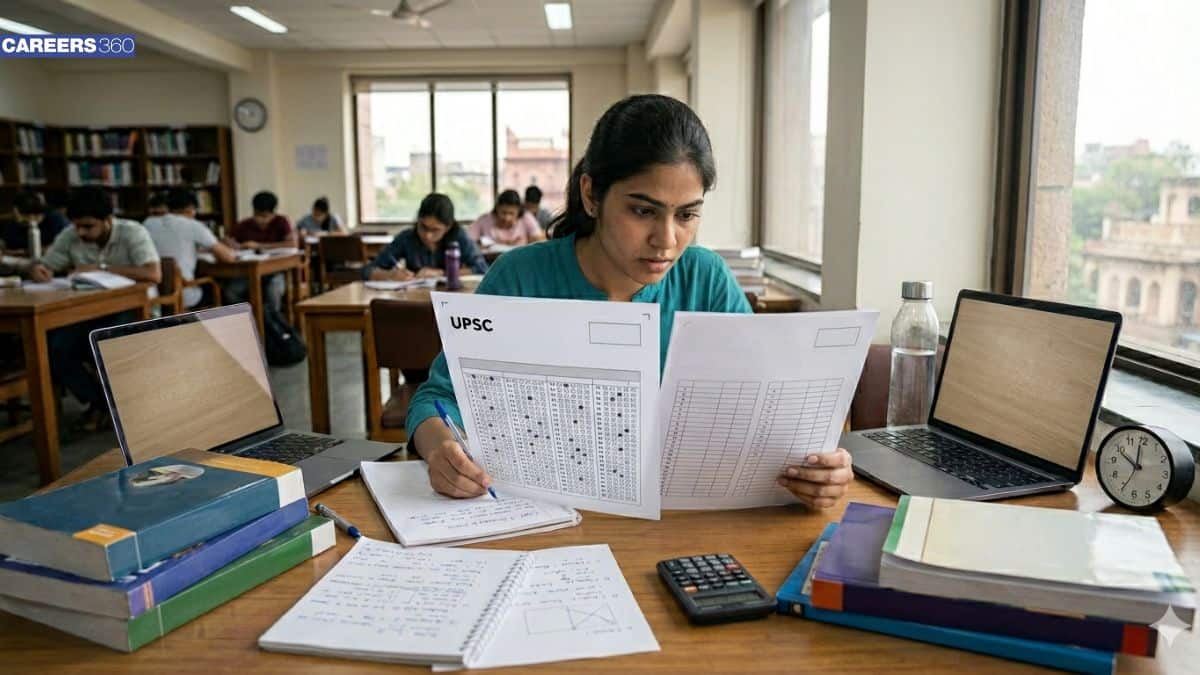
The applicants can use the answer key to calculate their tentative scores and estimate their qualification for the mains examination. Candidates can check whether they have qualified for the UPSC IAS prelims cut off using the answer key. The aspirants can also download the previous years' question papers and practice solving them for the UPSC IAS exam. The following article provides further information about the UPSC IAS Prelims answer key.
UPSC IAS Prelims CSAT Answer Key 2026
The commission releases the UPSC IAS Prelims 2026 CSAT answer key a few days after the completion of the exam. The table below provides the UPSC IAS 2026 Prelims CSAT answer key.
UPSC IAS 2026 Prelims CSAT Paper 2 Answer Key by Vision IAS
UPSC IAS Prelims CSAT Answer Key (unofficial) | Check here |
UPSC IAS Prelims Provisional Answer Key (official) | GS Paper 1- Click here GS Paper 2- Click here |
Candidates can follow the steps below to download the UPSC IAS Prelims answer key PDF from the official website.
UPSC IAS Prelims 2026 CSAT Paper 2 Answer Key Date
Candidates can go through the unofficial answer keys to have an estimate of their scores. The following table provides the important dates for the UPSC IAS Prelims answer key 2026.
UPSC IAS Prelims Answer Key Dates 2026
Event | Dates |
UPSC IAS Prelims exam date 2026 | May 24, 2026 |
Unofficial UPSC IAS answer key date | May 24, 2026 |
| Provisional UPSC IAS Prelims answer key date | May 27, 2026 |
Official UPSC IAS Prelims answer key date | To be announced |
Also Read-
Steps to download the UPSC IAS 2026 Prelims Answer Key
Visit the official UPSC website, upsc.gov.in
Click on the ‘Examination’ tab
Select the ‘Answer keys’ option
Search for ‘UPSC IAS Answer Key PDF’
Open and download the PDF for future reference
Also Read-
Frequently Asked Questions (FAQs)
UPSC marks are typically released only after the entire examination cycle (Prelims, Mains, and Interviews) is completed. UPSC to Release Provisional Answer Key After Prelims from 2026.
Candidates must score a minimum of 33% of the total 200 marks, which equates to 66.67 marks out of 200.
The paper evaluates candidates across five primary areas [UPSC CSAT Preparation Strategy 2026, Key Components, Tips]:
Reading Comprehension
Quantitative Aptitude
Logical Reasoning
Analytical Ability
Data Interpretation
Questions related to UPSC CSE
On Question asked by student community
Dear Student, you are actually at a good stage to start preparing for your IAS goal. For now, focus on doing well in Class 12 while developing a habit of reading newspapers, understanding current affairs and strengthening subjects such as History, Geography, Polity and Economics. After school, you can choose
Hello Aspirant,
If your goal is to become an IAS officer, you can choose any stream like Arts, Humanities, Science, or Commerce, because UPSC does not require a particular stream in Classes 11–12.
However, Humanities and Arts can be a practical choice because subjects such as Political Science, History, Geography,
Hello Student, when choosing an IAS coaching institute in Delhi, it is useful to compare factors such as faculty, course structure, study material, test series, current affairs support, batch size, fees and student feedback. If you share your budget, preparation level and preferred area in Delhi, I can help you
Hello there!
That’s a wonderful and ambitious goal! Becoming an IAS officer requires clearing the UPSC Civil Services Examination.
You can start by building a strong foundation in NCERTs (Classes 6–12), current affairs, Indian Polity, History, Geography, Economy and basic answer-writing. After graduation, you can appear for UPSC CSE, provided
Dear Student,
IAS banne ke liye aapko UPSC exam pass karni hogi. Iss exam ke main stages hai: Prelims, Mains aur Personality Test.
Check : How to Become a IAS Officer