
Search Colleges, Exams, Schools & more


Login

REET 2024 Exam - Certificate (Released), Validity

What’s New 
Other Top Exam Stories
About REET 2024
REET Exam 2024 - Board of Secondary Education, Rajasthan has issued the REET certificate 2024 online on the official website. The board declared the REET 2024 result on May 8, 2025 at rajeduboard.rajasthan.gov.in/reet2024.co.in. The REET answer key objection facility 2024 was available until March 31, 2025. The provisional REET 2024 answer key was released on March 25, 2025. BSER conducted the REET exam 2024 on February 27 and 28, 2025 for level 1 and 2. The REET admit card 2024 was released on February 20, 2025.
The REET application form correction window 2024 was opened from January 17 to 19, 2025. The board activated the REET 2024 application form from December 16, 2024 to January 15, 2025. Candidates who successfully submit the application form, can download the REET admit card 2024. The REET notification 2024 was released on December 12, 2024. The board has introduced 5 options for each MCQ in the REET question paper 2025. Also, there will be a negative marking of -1/3 or 0.33 for every unanswered and incorrect response in REET exam. The REET notification contains details on REET 2024 exam date, REET syllabus, exam pattern, exam centres and more.
Eligible candidates who wish to appear for the REET exam 2024 can application form in online mode. In order to qualify the REET exam 2024, General candidates are required to score at least 60% marks whereas SC/ST candidates have to secure 36% marks. All the candidates who qualify the exam will be awarded an eligibility certificate and they will be able to apply in government schools or private schools of Rajasthan. The notification of the REET exam is released by the Board of Secondary Education, Rajasthan for all those candidates who aspire to become a teacher from class I to VIII. All the eligible candidates can apply for REET. The eligibility criteria of REET are different for both papers. As per the notification, the exam is conducted for two papers - paper I (class I to V) and paper II (class VI to VIII) in offline mode for 2 hours and 30 minutes.
Read More
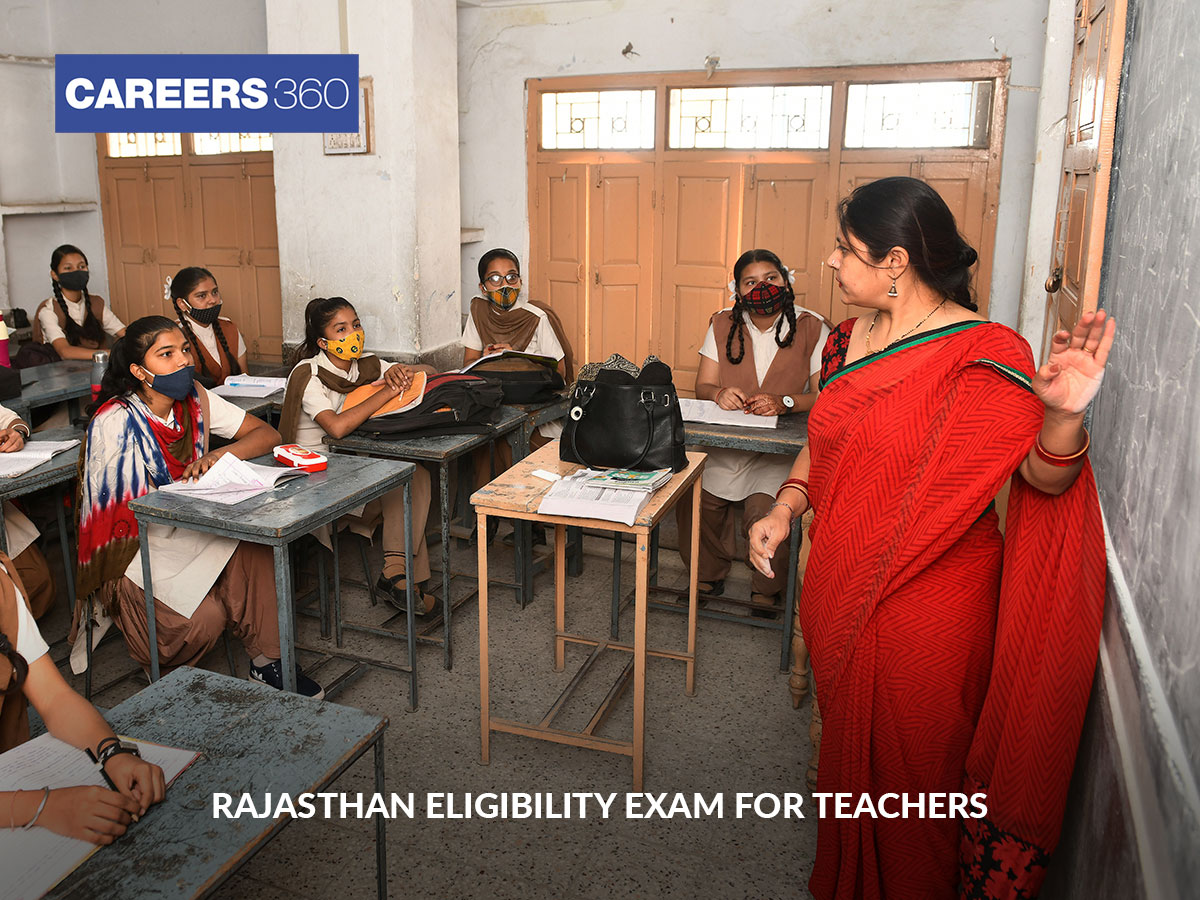
REET 2024 Highlights
| Full Exam Name | Rajasthan Eligibility Exam for Teachers |
| Short Exam Name | REET |
| Conducting Body | Board of Secondary Education, Rajasthan |
| Frequency Of Conduct | Once a year |
| Exam Level | State Level Exam |
| Languages | English +1 more |
| Mode Of Application | online |
| Exam Duration | Paper 1:2 Hours 30 Minutes +1 more |
REET Important Dates
REET Rajasthan Eligibility Exam for Teachers (session 2024)
The REET answer key 2024 challenge window was open until March 31, 2025. The REET answer key 2024 was released on March 25, 2025 on the official website. The answer key of REET 2024 has been released by the Board of Secondary Education, Rajasthan in the form of a pdf.
With the help of the REET answer key 2024, candidates can check their correct answers marked against the questions asked in the exam. They can also calculate their probable scores. Initially, a provisional REET 2024 answer key is released whereas the final answer key will be released only after the examination authorities have evaluated the challenged answer key.
Paper 1
REET Paper I - Class I to V
Class | Educational Qualification |
I to V |
|
Paper 2
Class | Educational Qualification |
VI to VIII |
|
Loading form...
BSER activated the REET 2024 application form correction window from January 17 to 19, 2025 on the official website. The REET 2024 application form window was closed on January 15, 2025. The REET application form 2024 was released on December 16, 2024. Candidates are advised to check the eligibility criteria of REET 2024 before filling the online application form in order to avoid rejection at any later stage. To fill the application form, candidates are required to enter their name, father’s name, mother’s name and then they have to pay the application fee of REET.
To proceed further, candidates had to wait until the verification of the application fees. Once the verification is completed, they can fill and submit the application form of REET. Before final submission, candidates would be given a provision to go through the whole application form in order to avoid any kind of mistakes. After final submission, they would not be able to change or make any corrections in their application form. Candidates must also take a printout of the REET application form for future reference.
Application Fees:
- Level 1 - Rs.550
- Level 2 (Previous Applicants of REET) - No fee
- Level 2 (New applicants) - Rs. 550
Both Levels 1 and 2:
- New Applicants - Rs.750
- Previous applicants of REET - Rs. 200
Documents Required at Exam REET 2024
Rajasthan Eligibility Exam for Teachers 2024
REET 2024 Exam Centers
| State | City |
| Rajasthan | Ajmer Bikaner Jaipur Jaisalmer Udaipur Chittorgarh Jodhpur |
Paper 1
For REET paper I total marks allotted is 150 with a negative marking of -1/3 for each ananswered or incorrect respose and candidates have to complete their paper within 2 hours and 30 minutes and the question will be of multiple choice questions.
Subjects | Number of questions | Marks | Time duration |
Child Development and Education | 30 | 30 | 2 hours and 30 minutes |
Language - I (Sanskrit/Hindi/English/Urdu/Sindhi/Punjabi/Gujarati) | 30 | 30 | |
Language - II (Hindi/English/Sanskrit/Urdu/Sindhi/Punjabi/Gujarati) | 30 | 30 | |
Environmental Studies | 30 | 30 | |
Mathematics | 30 | 30 |
Paper 2
S No. | Subjects | Number of questions | Marks |
1 | Child Development and Education | 30 | 30 |
2 | Language - I (Sanskrit/Hindi/English/Urdu/Sindhi/Punjabi/Gujarati) | 30 | 30 |
3 | Language - II (Hindi/English/Sanskrit/Urdu/Sindhi/Punjabi/Gujarati) | 30 | 30 |
4 | 1.Mathematics and Science Or 2.Social Studies | 60 | 60 |
REET 2024 Syllabus
REET Paper 1 Syllabus
Child development
Individual differences
Personality
Intelligence
Understanding diverse learners
Adjustment
How children learn
Teaching learning process
Meaning and purposes of assessment, measurement and evaluation
Right to Education Act 2009 (Role and Responsibilities of Teachers)
Unseen prose passage
Framing questions
Principles of teaching English, methods and approaches to English language teaching
Development of language skills, teaching learning materials
Unseen poem
Modal auxiliaries, common idioms, and phrasal literary terms
Principles of teaching English, communicative approach to English, language teaching, challenges of teaching English
Whole numbers up to one crore
Concept of fraction
Plane and curved surfaces
Length, weight, capacity, time, measurement of area and their standard units and relation between them
Family
Clothes and habitats
Profession
Our culture and civilization
Transport and communication
Personal hygiene
Living beings
Water
Concept and scope of environment studies
Environmental pedagogy
Child development and pedagogy: Unit 01
Child development
- Concept of growth and development, dimensions, and principles of development
- Factors affecting development (specially in the context of family and school) and their relationship with learning
Child development and pedagogy: Unit 03
Individual differences
- Meaning, types, and factors affecting individual differences understanding individual differences
Child development and pedagogy: Unit 04
Personality
- Concept and types of personality, factors responsible for shaping it
- Its measurement
Child development and pedagogy: Unit 05
Intelligence
- Concept, theories, and its measurement
- Multidimensional Intelligence
- Its implication
Child development and pedagogy: Unit 06
Understanding diverse learners
- Backward, mentally retarded, gifted, creative, disadvantaged-deprived, CWSN, children with learning disabilities
Child development and pedagogy: Unit 08
Adjustment
- Concept and ways of adjustment
- Role of teacher in the adjustment
Child development and pedagogy: Unit 11
How children learn
- Learning processes, reflection, imagination, and argument
Child development and pedagogy: Unit 13
Teaching learning process
- Teaching learning strategies and methods in the context of national curriculum framework 2005
Child development and pedagogy: Unit 14
Meaning and purposes of assessment, measurement and evaluation
- Comprehensive and continuous evaluation
- Construction of achievement test, learning outcomes
Child development and pedagogy: Unit 16
Right to Education Act 2009 (Role and Responsibilities of Teachers)
English Language-I: Unit 01
Unseen prose passage
- Synonyms, antonyms, spellings, word-formation, one word substitution
- Parts of speech, tenses, determiners, degrees of comparison
English Language-I: Unit 02
Framing questions
- Wh-questions, active and passive voice, narration, knowledge of English sounds and phonetic symbols
English Language-I: Unit 03
Principles of teaching English, methods and approaches to English language teaching
English Language-I: Unit 04
Development of language skills, teaching learning materials
- Text books, multimedia materials, and other resources
English Language-II: Unit 02
Unseen poem
- Identification of alliteration, simile, metaphor personification, assonance, rhyme
English Language-II: Unit 03
Modal auxiliaries, common idioms, and phrasal literary terms
- Elegy, sonnet, short story, drama
English Language-II: Unit 05
Principles of teaching English, communicative approach to English, language teaching, challenges of teaching English
- Difficulties in learning English (role of home language, multilingualism)
Mathematics: Unit 01
Whole numbers up to one crore
- Place value, comparison; fundamental mathematical operations: Addition, subtraction, multiplication, and division; Indian currency
Mathematics: Unit 02
Concept of fraction
- Proper fractions, comparison of proper fraction of same denominator, mixed fractions, comparison of proper fractions of unequal denominators, addition and substation of fractions
- Prime and composite numbers, prime factors, lowest common multiple (LCM) and highest common factor (HCF)
Mathematics: Unit 04
Plane and curved surfaces
- Plane and solid geometrical figures, properties of plane geometrical figures; point, line, ray, line segment; angle and their types
Mathematics: Unit 05
Length, weight, capacity, time, measurement of area and their standard units and relation between them
- Area and perimeter of plane surfaces of square and rectangular objects
Environment Studies: Unit 01
Family
- Personal relationships, nuclear and joint families, social abuses (child marriage, dowry system, child labour, theft); addiction (intoxication, smoking) and it's personal, social, and economical bad effects
Environment Studies: Unit 02
Clothes and habitats
- Clothes for different seasons; maintenance of clothes at home; handloom and power loom; habitats of living beings, various types of houses; cleanliness of houses and neighboring areas; different types of materials for building houses
Environment Studies: Unit 03
Profession
- Profession of your surroundings (stitching clothes, gardening, farming, animal rearing, vegetable vendor, etc), small and cottage industries; major industries of Rajasthan state, need for consumer protection, cooperative societies
Environment Studies: Unit 04
Our culture and civilization
- National symbols, national festivals, fairs and festivals of Rajasthan, dresses and ornaments of Rajasthan, food-habits and architecture of Rajasthan; tourist places of Rajasthan; major great personalities and proud of Rajasthan
- Heritage of Rajasthan (forts, palaces, and monuments), paintings of Rajasthan, lok-devta of Rajasthan
Environment Studies: Unit 05
Transport and communication
- Means of transport and communication; rules for pedestrians and transport, traffic symbols, effects of means of communication on the life style
Environment Studies: Unit 06
Personal hygiene
- External parts of our body and their cleanliness; general information about the internal parts of the body; balance diet and its importance
- Common diseases (gastroenteritis, amoebiasis, methaemoglobin, anemia, fluorosis, malaria, dengue), their causes and methods of prevention; pulse polio campaign
Environment Studies: Unit 07
Living beings
- Levels of organization of plants and animals, diversity of living organisms, state flower, state tree, state bird, state animal; knowledge of reserve forest and wildlife (national parks, sanctuaries, tiger reserve, world heritage)
- Conservation of species of plants and animals, agricultural practices
Environment Studies: Unit 08
Water
- Basic knowledge of water, forest, wetlands and deserts; different kind of pollution and pollution control, water properties
- Sources, management
- Artistic water sources, potable water and sources of irrigation in Rajasthan
Environment Studies: Unit 11
Concept and scope of environment studies
- Significance of environment studies, integrated environment studies, science environmental studies and environmental education learning principles, scope and relation to science and social science
Environment Studies: Unit 12
Environmental pedagogy
- Approaches of presenting concepts
- Activities, experimentation/ practical work
- Discussion, comprehensive and continuous evaluation, teaching material/ aids, problems of teaching, information and communication technology
REET Paper 2 Syllabus
Child development
Individual differences
Personality
Intelligence
Understanding diverse learners
Adjustment
Meaning and Concept of learning and its processes
Theories of learning (behaviourism, gestalt, cognitivism, constructivism) and their implication
How children learn
Teaching learning processes
Meaning and purposes of assessment, measurement, and evaluation
Right to Education Act 2009 (Role and Responsibilities of Teachers)
Unseen prose passage
Framing questions
Principles of teaching English, methods and approaches to English language teaching
Development of language skills, teaching learning materials
Continuous and comprehensive evaluation, assessment and evaluation in language
Unseen poem passage
Modal auxiliaries, common idioms and phrases, literary terms
Principles of teaching English, communicative approach to English language teaching, challenges of teaching English
Algebraic expressions
Plane figures
Area and perimeter of plane figures
Statistics
Living being
Human body and health
Animal reproduction and adolescence
Mechanics
Heat and temperature
Light and sound
Electricity and magnetism
Science and technology
Structure of matter
Chemical substances
Nature and structure of sciences
Indian civilization, culture, and society
Mauryan and Gupta empires, and post-Gupta period
Medieval and Modern Period
Indian constitution and democracy
Government: composition and functions
Geography and resources of India
Geography and resources of Rajasthan
History of Rajasthan
Art and cultural of Rajasthan
Pedagogical issues-I
Pedagogical issues-II
Child development and pedagogy: Unit 01
Child development
- Concept of growth and development, dimensions and principles of development
- Factors affecting development (especially in the context of family and school) and their relationship with learning
Child development and pedagogy: Unit 03
Individual differences
- Meaning, types and factors affecting individual differences
Child development and pedagogy: Unit 04
Personality
- Concept and types of personality, factors responsible for shaping it
- Its measurement
Child development and pedagogy: Unit 05
Intelligence
- Concept, theories and its measurement
- Multidimensional Intelligence
- Its implication
Child development and pedagogy: Unit 06
Understanding diverse learners
- Backward, mentally retarded, gifted, creative, disadvantaged-deprived, CWSN, children with learning disabilities
Child development and pedagogy: Unit 08
Adjustment
- Concept and ways adjustment
- Role of teacher in the adjustment
Child development and pedagogy: Unit 09
Meaning and Concept of learning and its processes
- Factors affecting learning
Child development and pedagogy: Unit 10
Theories of learning (behaviourism, gestalt, cognitivism, constructivism) and their implication
Child development and pedagogy: Unit 11
How children learn
- Learning processes, reflection, imagination and argument constructivism, experiential learning, concept mapping, investigatory, approach, problem solving
Child development and pedagogy: Unit 13
Teaching learning processes
- Teaching learning strategies and methods in the context of national curriculum framework 2005
Child development and pedagogy: Unit 14
Meaning and purposes of assessment, measurement, and evaluation
- Comprehensive and continuous evaluation
- Construction of achievement test, learning outcomes
Child development and pedagogy: Unit 16
Right to Education Act 2009 (Role and Responsibilities of Teachers)
English Language-I: Unit 01
Unseen prose passage
- Synonyms, antonyms, spellings, word-formation, one word substitution
- Parts of speech, tenses, determiners, degrees of comparison
English Language-I: Unit 02
Framing questions
- Wh-questions, active and passive voice, narration knowledge of English sounds and phonetic symbols
English Language-I: Unit 03
Principles of teaching English, methods and approaches to English language teaching
English Language-I: Unit 04
Development of language skills, teaching learning materials
- Text books, multimedia materials and other resources
English Language-I: Unit 05
Continuous and comprehensive evaluation, assessment and evaluation in language
English Language-II: Unit 02
Unseen poem passage
- Identification of alliteration, simile, metaphor personification, assonance, rhyme
English Language-II: Unit 03
Modal auxiliaries, common idioms and phrases, literary terms
- Elegy, sonnet, short story, drama
English Language-II: Unit 05
Principles of teaching English, communicative approach to English language teaching, challenges of teaching English
- Difficulties in learning English (role of home language multilingualism)
Mathematics: Unit 02
Algebraic expressions
- Addition, subtraction, multiplication, and division, identities
Mathematics: Unit 11
Plane figures
- Triangles, congruence of triangles, quadrilaterals and circle, polygon
Mathematics: Unit 12
Area and perimeter of plane figures
- Triangles, rectangles, parallelograms, and trapeziums
Mathematics: Unit 14
Statistics
- Collection and classification of data, frequency distribution table, tally marks, bar graph and histogram, circular graph (pai diagram)
Science: Unit 03
Living being
- Different parts of plants, nutrition in plants, respiration and excretion, plant cell and animal cell-their structure and function, cell division
Science: Unit 04
Human body and health
- Diseases spread by microorganisms, (tuberculosis, measles, diphtheria, cholera, typhoid); prevention from diseases; different systems of human body; infectious diseases (reasons of spreading and prevention)
- sources of food, major components of food and diseases developed due to their deficiency; balanced diet
Science: Unit 05
Animal reproduction and adolescence
- Methods of reproduction; sexual and asexual
- Adolescence and puberty: Changes in body, role of hormones in reproductions, reproductive health
Science: Unit 06
Mechanics
- Force and motion, types of forces (muscular force, frictional force, gravitational force, magnetic force, electrostatic force), types of motion (linear, circular, vibrational, periodic, and rotational motion) pressure
- Atmospheric pressure buoyancy force, work and energy, traditional and alternative sources of energy; energy conservation
Science: Unit 07
Heat and temperature
- Heat and temperature means, thermometers, heat transmission (conduction, convention, and radiation)
Science: Unit 08
Light and sound
- Sources of light, reflection of light, spherical mirrors, image formation by plane and spherical mirrors, refraction of light, lenses and image formation by lenses, sound, characteristics of sound, sound propagation, sound pollution
Science: Unit 09
Electricity and magnetism
- Electric current, electric circuit, heating, magnetic and chemical effects of current, magnet and magnetism
Science: Unit 10
Science and technology
- Importance of science in daily life; synthetic fibers and plastics-types and characteristics of synthetic fibers
- Plastic and its properties, plastic and environment, detergents, cement, etc; science and technology in medical field (X-ray, CT scan, surgery, ultrasound and LASER); in the field of telecommunication-general information about fax machine, computer
- Internet, e-mail, and website
Science: Unit 12
Structure of matter
- Atom and molecule; structure of atom; element, compound and mixture; separation of impurities of substances; symbols of elements; chemical formulae of compounds and chemical equations, physical and chemical change
Science: Unit 13
Chemical substances
- Oxides, greenhouse effect and global warming, hydrocarbon (introductory knowledge), acide, alkali, and salt, oxygen gas, nitrogen gas and nitrogen cycle, coal, petroleum and natural gas
Science: Unit 15
Nature and structure of sciences
- Natural science: Aims and objectives, natural resources, environment, pollution and control, biodiversity, adaptation, waste management
- Organic evolution, understanding the science, methods of science teaching
Social studies: Unit 01
Indian civilization, culture, and society
- Indus valley civilization, Vedic culture, Jainism and Buddhism, Mahajanapadas
Social studies: Unit 02
Mauryan and Gupta empires, and post-Gupta period
- Political history and administration, contribution to Indian culture, India (600-1000 AD), greater India
Social studies: Unit 03
Medieval and Modern Period
- The Bhakti and Sufi movement, Mughal-Rajput relations; Mughal administration, British policies towards Indian states, Revolt of 1857, impacts of British rule on Indian economy, renaissance and social reforms, Indian national movement (1885-1947)
Social studies: Unit 04
Indian constitution and democracy
- Making of the Indian constitution and its features, preamble, fundamental rights and fundamental duties, social justice, child rights and child protection, election in democracy and voters awareness
Social studies: Unit 05
Government: composition and functions
- Parliament, president, prime minister and council of ministers; Supreme Court, state government; Panchayati Raj and urban self-government (in reference to Rajasthan)
- District administration and judicial system
Social studies: Unit 06
Geography and resources of India
- Physiographic regions, climate, natural vegetation, wild life, multipurpose river-valley projects, soil, agriculture crops, industries, minerals, transportation, population, human resources
- Economic and social programmes of development
Social studies: Unit 07
Geography and resources of Rajasthan
- Physical regions, climate and drainage system, lakes, water conservation and harvesting, agriculture, soil, crops, minerals and energy resources, major canals and river-valley projects of Rajasthan, transport, industries, population
- Tourist places of Rajasthan, forest and wildlife
Social studies: Unit 08
History of Rajasthan
- Ancient civilizations and Janapadas, history of major dynasties of Rajasthan, contribution of Rajasthan in Revolt of 1857, Prajamandal, tribal and peasant movement in Rajasthan, integration of Rajasthan, major personalities of Rajasthan
Social studies: Unit 09
Art and cultural of Rajasthan
- Heritage of Rajasthan (forts, palaces, monuments) fairs, festivals, folk-arts of Rajasthan, painting of Rajasthan, folk dance and folk drama of Rajasthan, Lok-devta, Lok saint, folk music and musical instruments of Rajasthan
- Handicrafts and architecture of Rajasthan, dresses and ornaments of Rajasthan, languages and literature of Rajasthan
Social studies: Unit 10
Pedagogical issues-I
- Concept and nature of social science/ social studies; classroom processes, activities and discourse; problems of teaching social science/ social studies; developing critical thinking
Social studies: Unit 11
Pedagogical issues-II
- Enquiry/ empirical evidence; teaching learning material and teaching aids; information and communication technology
- Project work, learning outcomes, evaluation
The Board of Secondary Education, Rajasthan released the REET 2024 admit card on February 20, 2025 in online mode on the official website. All the candidates who have successfully submitted the REET application form can download the admit card of REET 2024. Also, information regarding the admit card might be sent to the registered email ID or contact number.
Candidates can download the admit card from the official website by entering their registration number and date of birth. The admit card of REET contains details like name, date of birth, category, date and time of exam and address of the exam centre.
Board of Secondary Education, Rajasthan has declared the REET result 2024 on May 8, 2025 in the online mode for both the papers (papers I and II). Candidates can check their REET 2024 result on the official website by entering their registration number/roll number and date of birth and password. All the candidates who qualify REET will be awarded an eligibility certificate which is valid for a lifetime.
In order to qualify the exam, candidates have to score the minimum qualifying marks as decided by the exam conducting body. Candidates belonging to general category will have to score at least 60% marks whereas SC/ST candidates required to score a minimum of 36% marks in order to pass the examination.
Steps to check the REET result 2024?
- In order to check the result of REET, candidates must go through the steps mentioned below:
- Visit the official website of BSER, Rajasthan.
- On the home page there will be a link saying the "REET 2024 result". Click the result link.
- Enter credentials such as the roll number for level I and roll number and date of birth for level II result of REET.
- The screen will display the result of REET 2024.
- Take a screenshot or printout of the REET result 2024 for future reference.
General Information
Contact Number:
01452630436 , 01452630437
Frequently Asked Questions (FAQs)
Q: What is the REET result date?
A:
The REET result 2024 date is May 8, 2025.
Q: When is the REET 2024 exam?
A:
The REET exam 2024 was conducted on February 27 and 28, 2025.
Q: Is there negative marking in REET 2024?
A:
Yes, there is negative marking in the REET 2024 exam of -1/3 or 0.33 marks for every unanswered and incorrect response.
Q: What is Reet qualification?
A:
Graduates passed or appearing in the final year of 2-year diploma in elementary education are eligible to apply for REET 2024.
Q: What is the REET exam?
A:
The REET or RTET is the teachers eligibility tests conducted by the BSER, Ajmer to make candidates eligible to apply for teacher posts in the state of Rajasthan from classes 1 to 8.
Articles
Related Stories
|
Upcoming Competition Exams

Ongoing Dates
Others
25 Aug, 2026 - 24 Sep, 2026
Ongoing Dates
Others
15 Sep, 2026 - 17 Sep, 2026
Upcoming Dates
Admit Card Date
20 Sep, 2026 - 30 Sep, 2026
Questions related to REET
On Question asked by student community
Have a question related to REET ?
Hello Dear Student,
You can check, find and access more information here:
Hello Dear Student,
For the Pre REET exam, you should primarily study the New NCERT books (Classes 6 to 12). Since REET and RBST board exams closely align with the updated NCERT syllabus, using the new versions ensures you cover all recent educational reforms.
You can check, find and access
Hello Dear Student,
If RSMSSB has not yet released the detailed scrutiny form format or document verification guidelines, there is no need to worry. You can still complete the application process and keep the necessary documents ready in advance.
Here are the steps you should follow:
-
Complete Your OTR (One

Applications for Admissions are open.
Apply for Online M.Com from Manipal University